
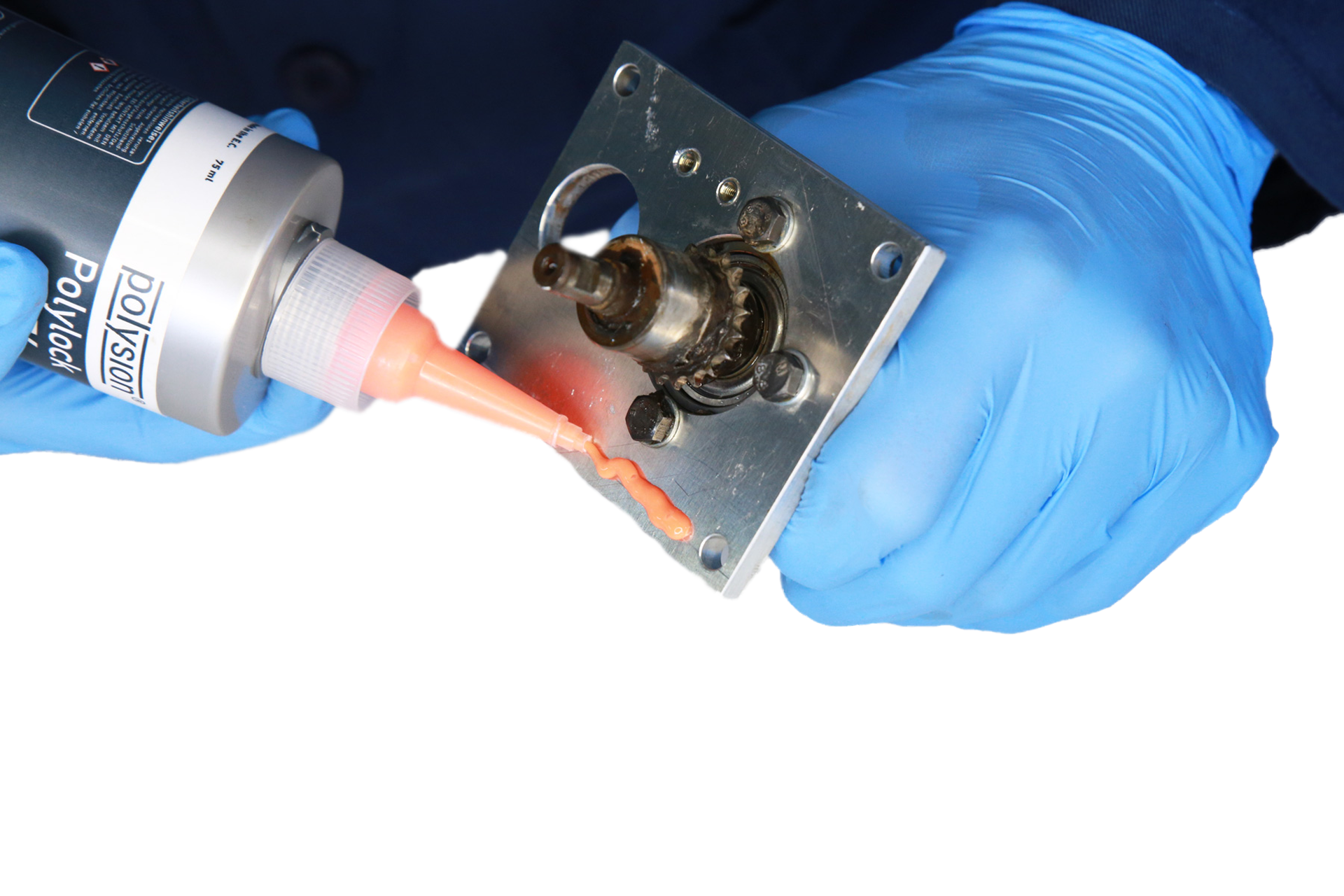
Surface Sealant
Surface sealant is a flexible anaerobic adhesive that replaces solid gaskets. It is easy to apply, adapts to manufacturing tolerances, and forms a flexible, temperature-resistant seal.
After curing, the surface sealant is resistant to high temperatures, vibrations, oils, greases, and chemicals, making it ideal for industrial applications.
Your contact person for anaerobic adhesives – flange sealing
Sebastian Coché
Phone: +49 2564 9317 - 11
E-Mail: service@polytec-vreden.de
Polytec offers reliable flange sealants for flexible, temperature-resistant sealing in industrial applications. The anaerobic adhesive replaces solid gaskets, is easy to apply, and adapts optimally to manufacturing tolerances.
Simply request your desired product using our enquiry form.
Information about anaerobic adhesives – flange sealing
An anaerobic flange sealant is a liquid or paste-like sealant applied between metal flange or housing surfaces. It cures in the absence of air and upon contact with metal, forming a tight, form-fitting seal.
“Anaerobic” means that curing takes place in the absence of oxygen. As long as the sealant is exposed to air, it remains liquid or paste-like. Curing only begins once it is confined between closely fitting metal surfaces.
Anaerobic flange sealants are used to seal metal flanges, housing components, gearbox covers, pump housings, engine components, compressors, hydraulic components, and machine housings.
Generally, not reliably. Anaerobic sealants require contact with metal and the absence of air to cure. In addition, some plastics may be damaged by the sealant. Suitable flexible sealants or special gaskets designed for plastics should be used for plastic housings.
The sealant cures when it is confined between metal surfaces and oxygen can no longer reach it. Metal ions support the chemical reaction.
No. Outside the flange joint, anaerobic flange sealant normally does not cure, or cures only very slowly. Excess material around the edges therefore often remains soft or liquid and can be wiped away.