
Anaerobic Adhesives
Our state-of-the-art anaerobic adhesives are the ideal solution for securely bonding metal components. They not only provide strong adhesion but also reliably fill irregularities and gaps, such as thread grooves, completely. A typical application for anaerobic adhesives is thread locking, where they play an indispensable role.
Anaerobic adhesives cure quickly and efficiently when they come into contact with metal and are deprived of oxygen. This property makes them particularly useful for industrial applications where a durable and resilient bond is required. Our anaerobic adhesives provide a reliable solution for a wide range of metallic connections by ensuring long-lasting stability and safety.
Learn more about the advantages and applications of our anaerobic adhesives and how they can optimize your metal connections. Visit our website and discover the variety of our products!
Your contact person for anaerobic adhesives
Sebastian Coché
Phone: +49 2564 9317 - 11
E-Mail: service@polytec-vreden.de
Our state-of-the-art anaerobic adhesives are the ideal solution for securely bonding metal components. They not only provide strong adhesion but also reliably fill surface irregularities and gaps, such as thread clearances, completely. A typical application for anaerobic adhesives is threadlocking, where they play an essential role.
Simply request your desired product using our enquiry form.
Preparation and Assembly
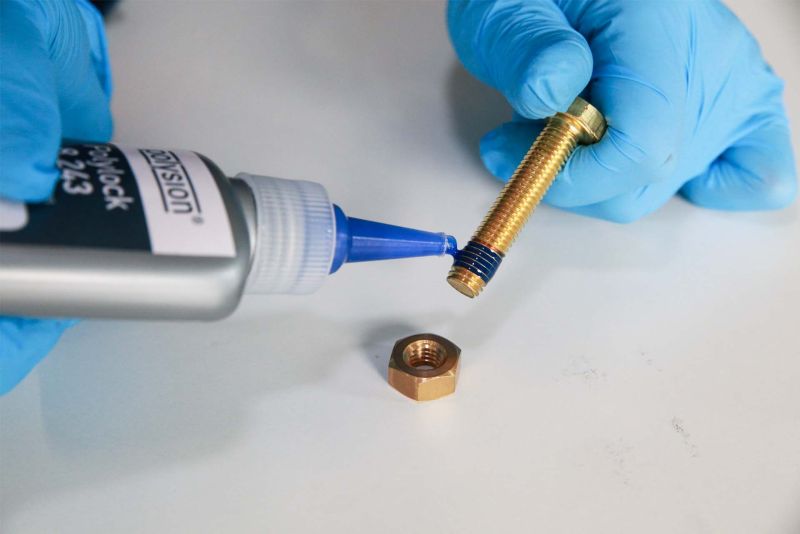
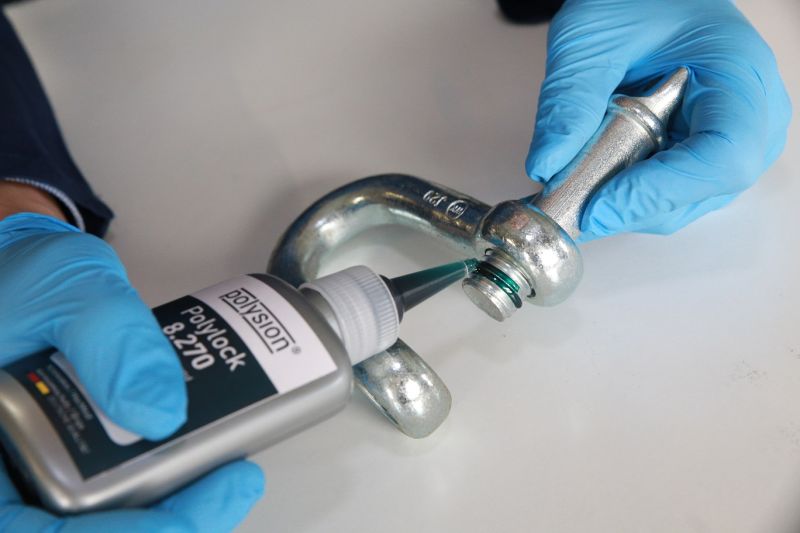
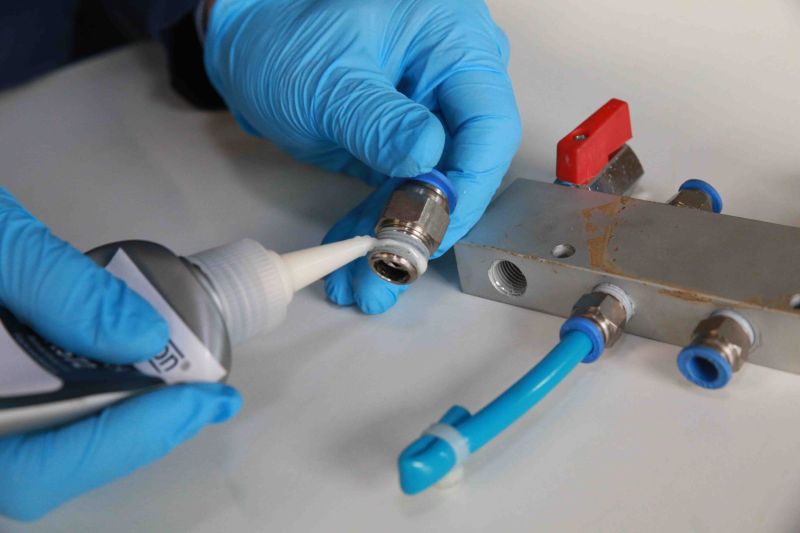
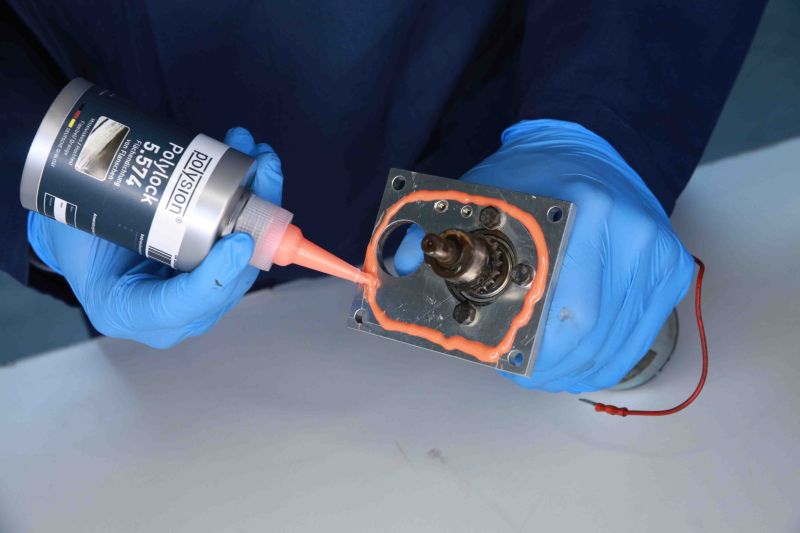
- Before application, clean surfaces from oil, grease, and dirt using Polysion industrial cleaner.
- For passive surfaces, the curing time can be accelerated by spraying the metal surface with an activator.
- Apply the adhesive without direct contact between the dispensing tip and the metal surface, and close the joint.
Metals
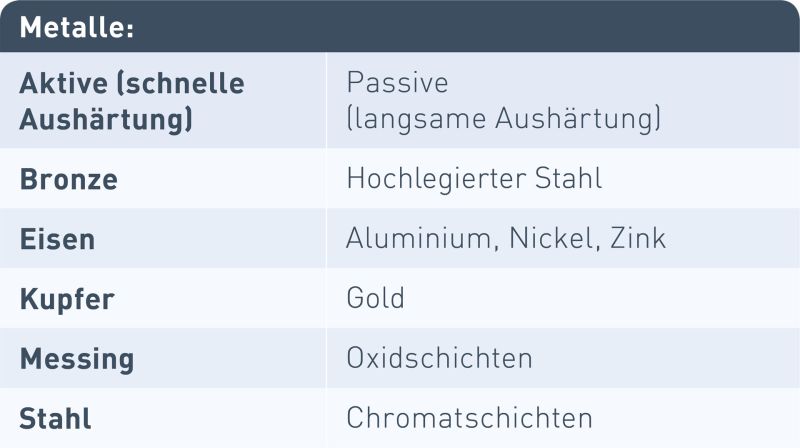
The more active a metal is, the faster the adhesive can cure. Therefore, we recommend using an activator for passive metals. This should be applied to the bonding surface beforehand.
Viscosity
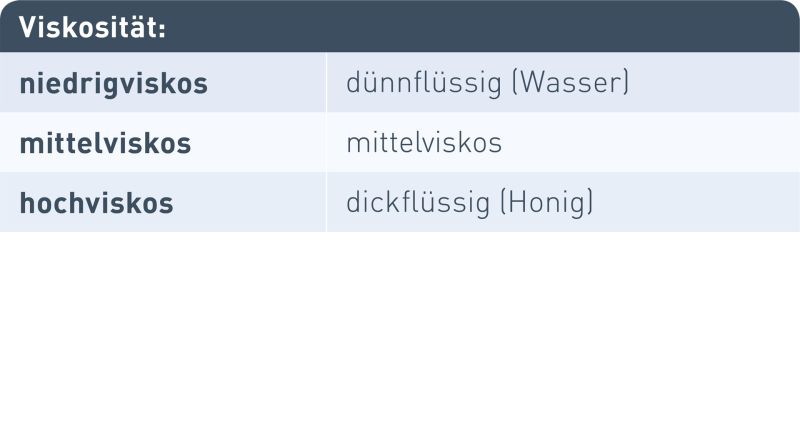
Viscosity is an important factor. If it is too low, the adhesive may run out of the application area and lose its securing effect. If the adhesive is too viscous, it may not fully penetrate the bonding gap. Therefore, choosing the correct viscosity for the application is crucial.
Strength
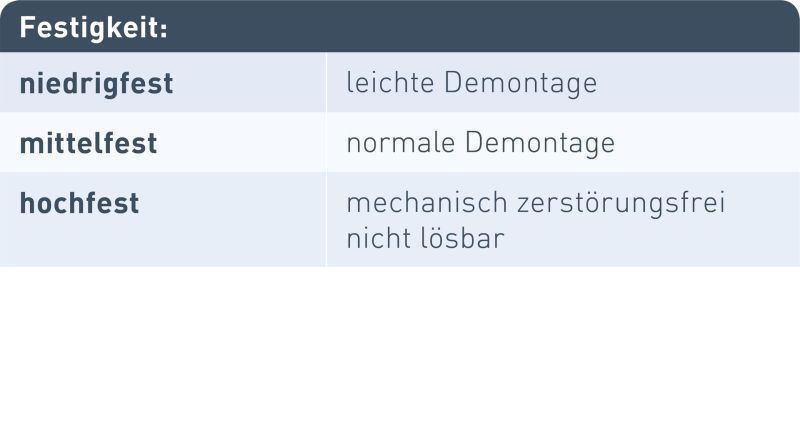
When selecting the strength, it is important to determine in advance whether the secured area needs to be opened regularly for maintenance and servicing. In such cases, a low- to medium-strength adhesive is recommended. For permanent and final locking, a high-strength solution is advisable. High-strength bonds can only be loosened with high temperatures and considerable force.
Information about anaerobic adhesives
Anaerobic adhesives are adhesives that cure in the absence of air. The curing process begins when the adhesive is confined between closely fitting metal surfaces and oxygen can no longer reach the adhesive layer.
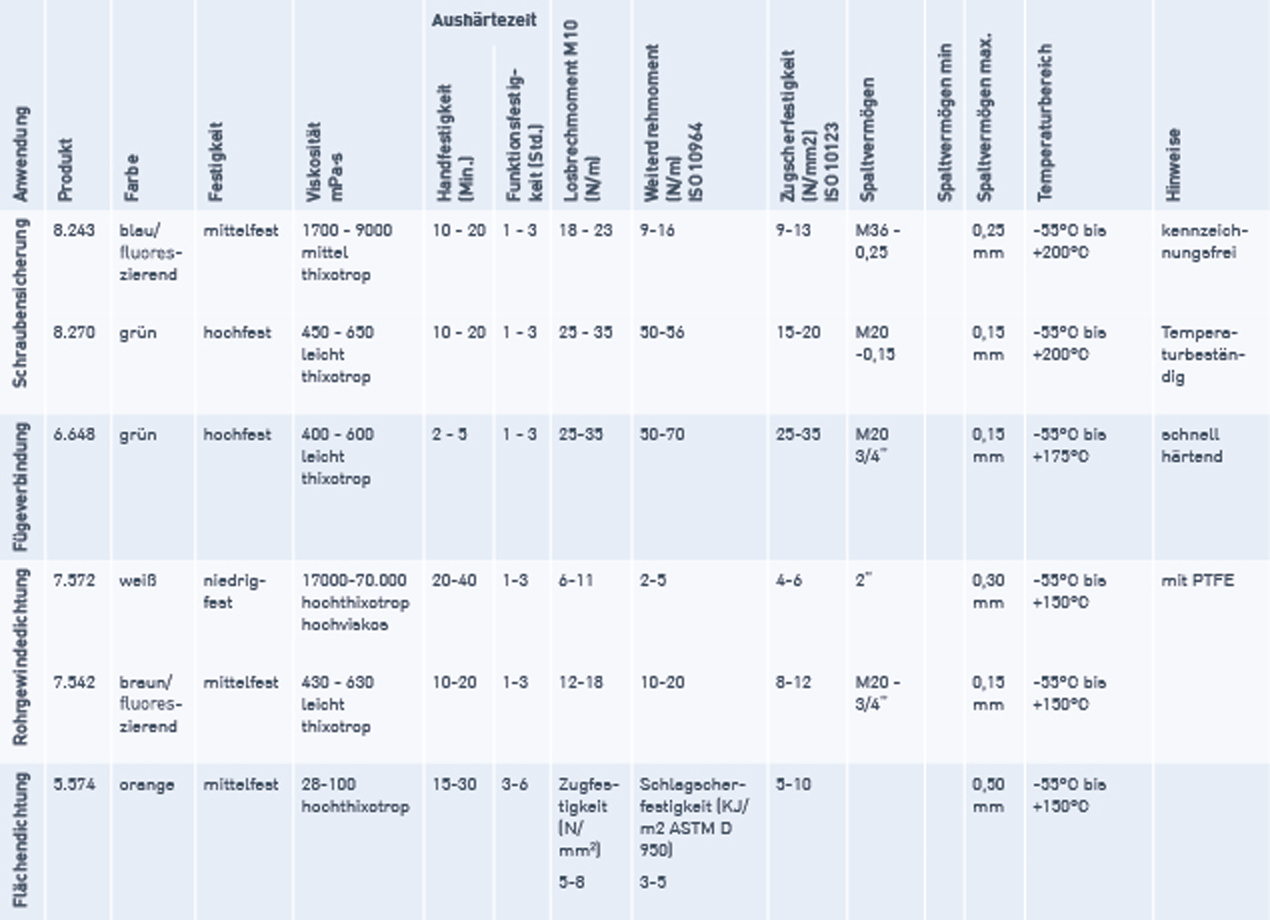
Anaerobic adhesives are primarily used for metal applications. Typical uses include threadlocking, shaft-hub connections, thread sealing, and flange sealing. They help secure, seal, or permanently fix connections.
The adhesive remains liquid as long as it is exposed to oxygen. Once it is confined between metal surfaces, the curing process begins. This creates a solid polymer bond that can secure, seal, or bond components, depending on the product.
Anaerobic adhesives are primarily suitable for metals such as steel, stainless steel, aluminium, brass, copper, and iron. They generally do not cure reliably on plastics, glass, wood, or ceramics because the required metal surface and absence of air are not present.
This depends on the product and its strength class. Low- and medium-strength anaerobic adhesives can usually be removed using standard tools. High-strength products may require the joint to be heated to facilitate disassembly.
Anaerobic adhesives should be stored in a cool, dry place with the container tightly sealed. Direct sunlight, heat, and frost should be avoided. The bottle must not be contaminated with metal particles or dirt, as this may affect the product’s shelf life.