
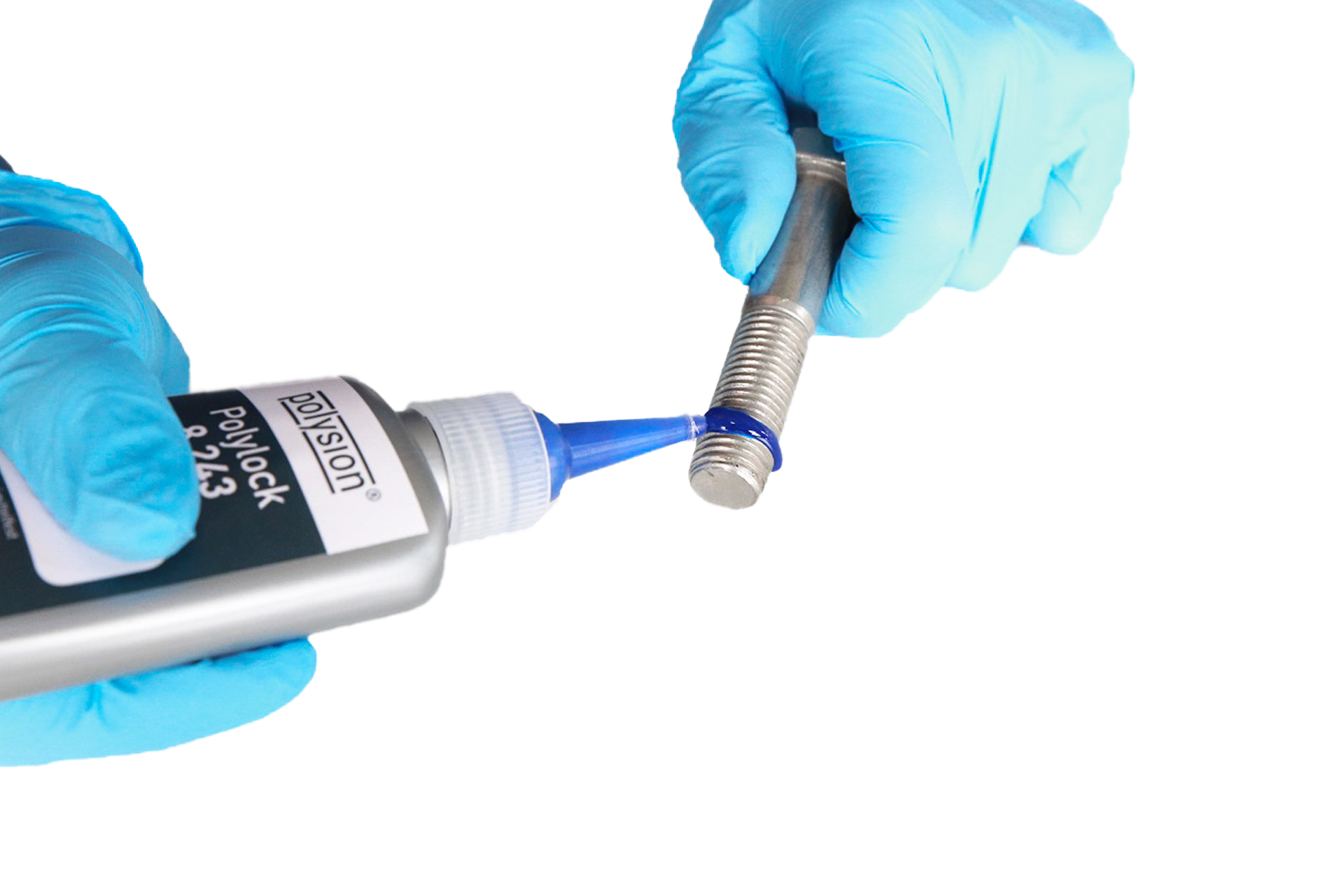
Threadlocker
Threadlockers enable the fast joining of bearing, shaft, and bushing connections by compensating for gaps and filling material irregularities, making additional locking elements unnecessary.
The adhesive is suitable for ball bearings, roller bearings, plain bearings, as well as bushings and pins. Before application, the parts should be clean and free from oil, grease, and dirt.
After curing, the threadlocker provides high resistance to temperatures, vibrations, oils, greases, and chemicals, and protects against loosening, vibrations, and fretting corrosion.
Your contact person for anaerobic adhesives – threadlocking
Sebastian Coché
Phone: +49 2564 9317 - 11
E-Mail: service@polytec-vreden.de
Polytec offers reliable threadlocking adhesives for the fast and secure assembly of bearing, shaft, and bushing connections. The adhesive bridges gaps, fills surface irregularities, and often eliminates the need for additional locking elements.
Simply request your desired product using our enquiry form.
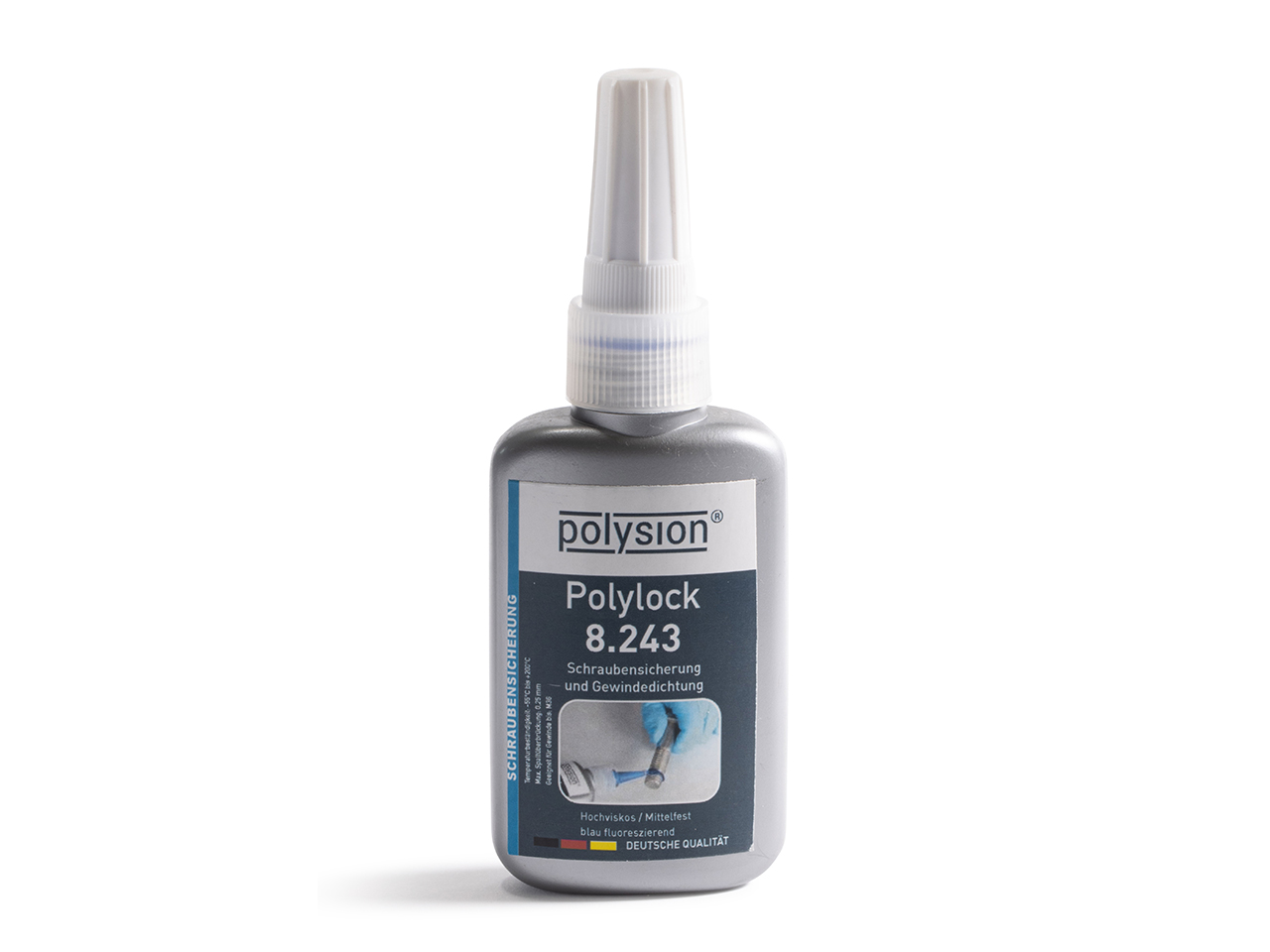
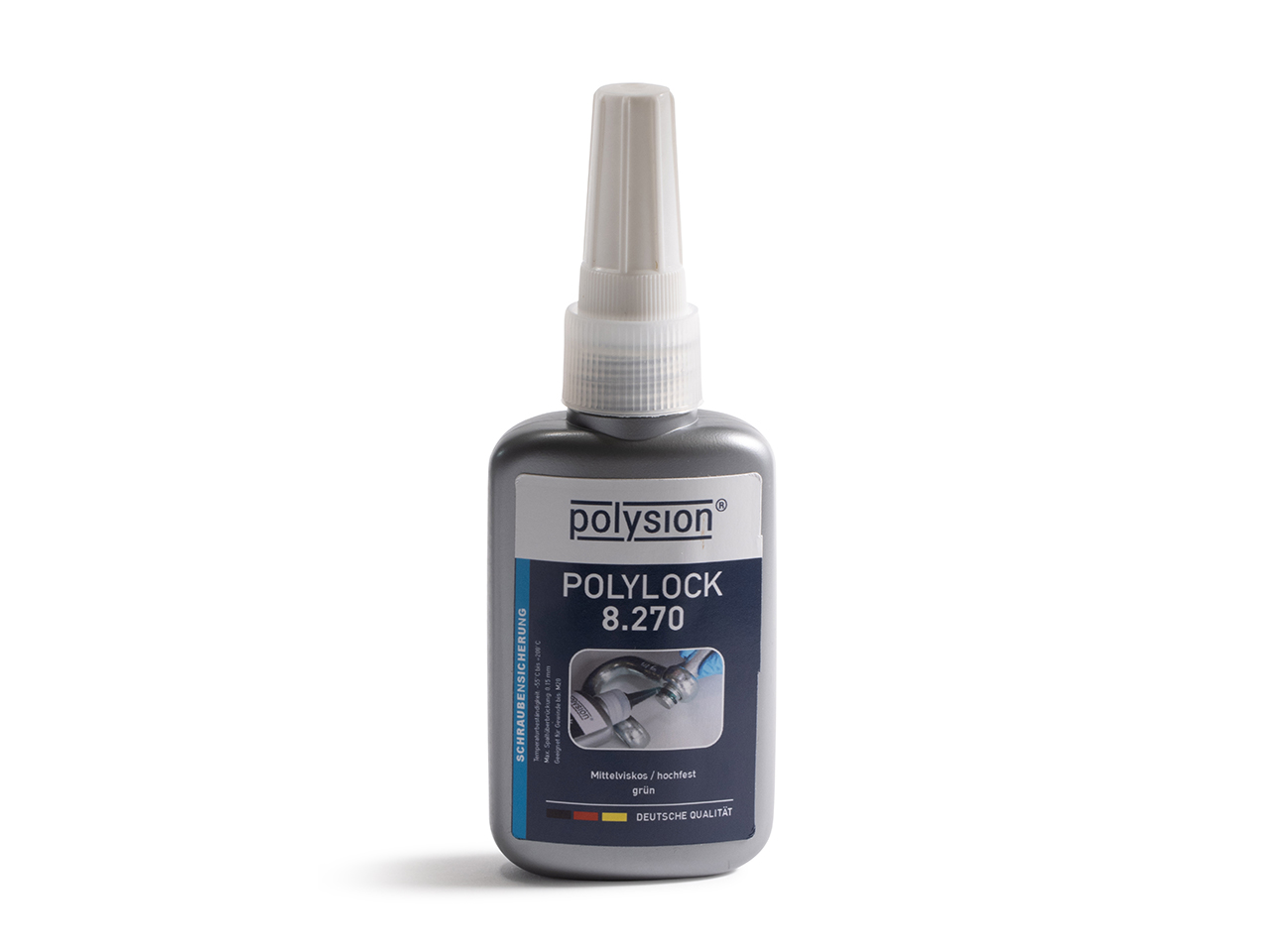
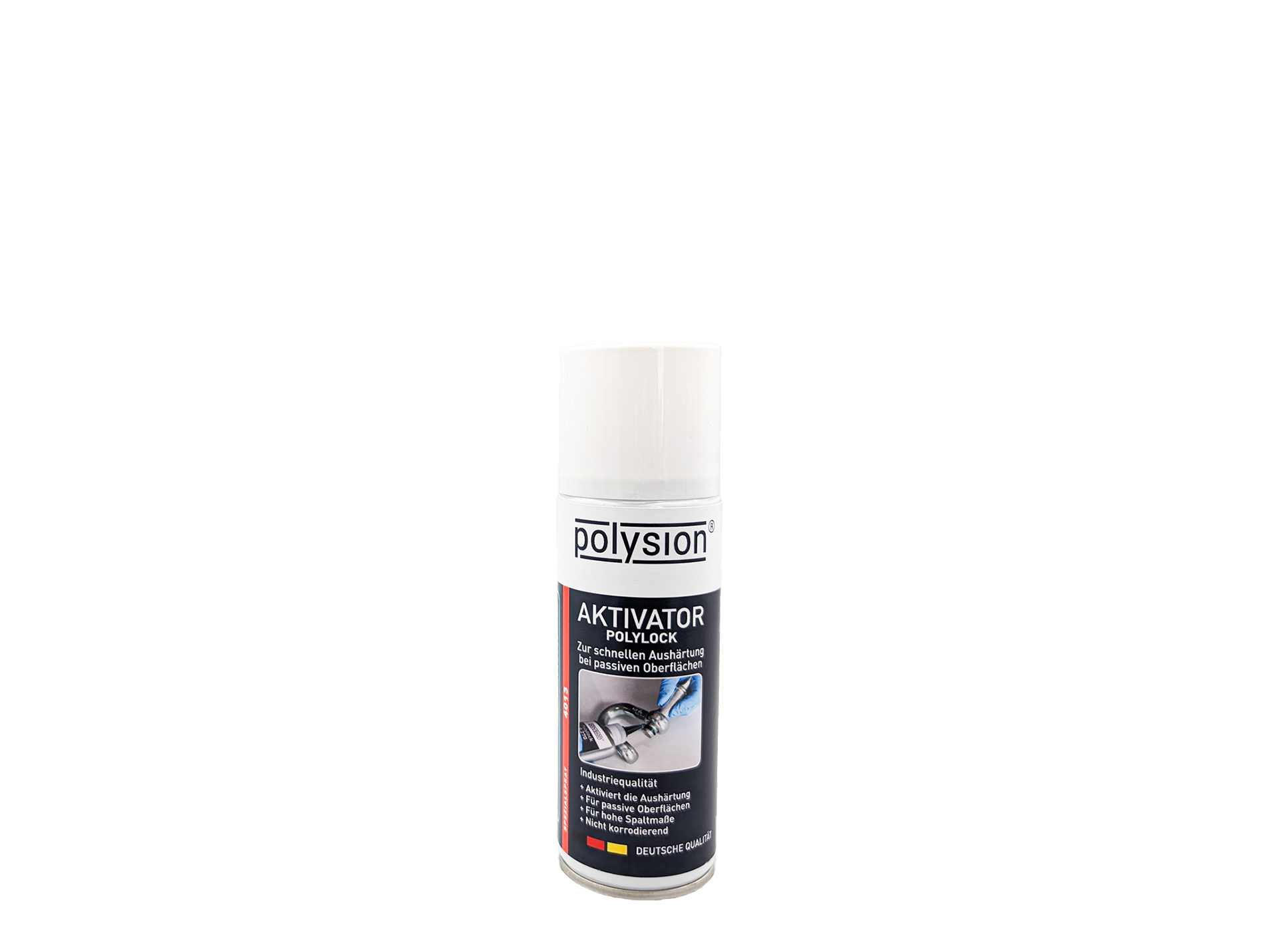
Information about anaerobic adhesives – threadlocking
Anaerobic adhesives are adhesives that cure in the absence of air and upon contact with metal. They are commonly used for threadlocking, thread sealing, retaining, and bearing fixation.
“Anaerobic” means that curing takes place in the absence of oxygen. As long as the adhesive is exposed to air, it remains liquid. Curing only begins once it is confined between closely fitting metal surfaces.
Anaerobic adhesives are primarily used for threadlocking, thread sealing, pipe threads, flange sealing, bearing retention, shaft-hub connections, and cylindrical assemblies.
An anaerobic threadlocker is a liquid adhesive applied to the threads of a screw or nut. Once the components have been screwed together, it cures in the threaded gap and secures the connection against loosening, vibrations, and leakage.
Threadlocking prevents threaded connections from loosening due to vibrations, impacts, temperature fluctuations, or dynamic loads. At the same time, it can protect the thread against corrosion and moisture.
Liquid threadlocker fills the entire threaded gap, thereby securing the complete connection. Mechanical locking elements often act only at specific points and may lose their effectiveness under vibration. In addition, threadlocker can provide a sealing effect and reduce corrosion within the thread.